


Bunnsies - Happy Pet World
4.0148.00 Reviews
App Specs
- Version
- 1.6.206
- Updated On
- License
- Free
- Downloads
- 10,000,000+
- Developer
- TutoTOONS
- Categories
- Educational
- Platform
- Android
Screenshots
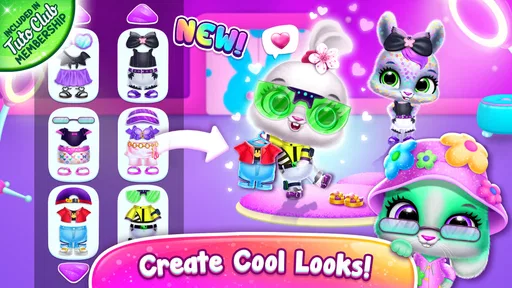
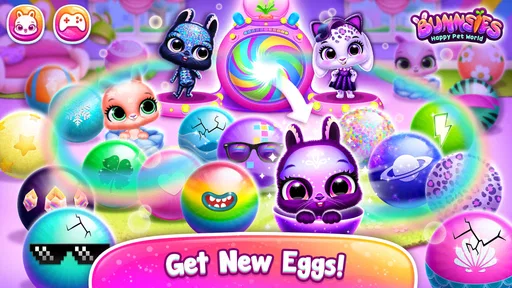
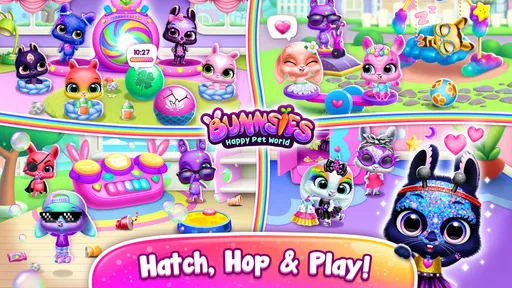
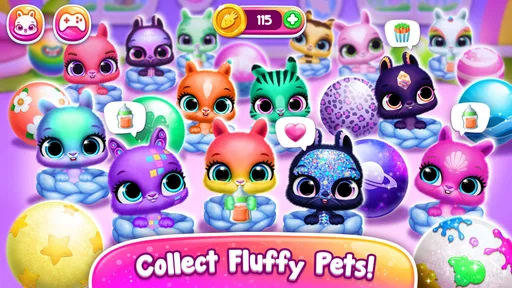
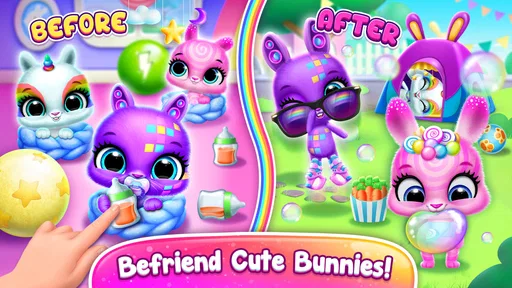
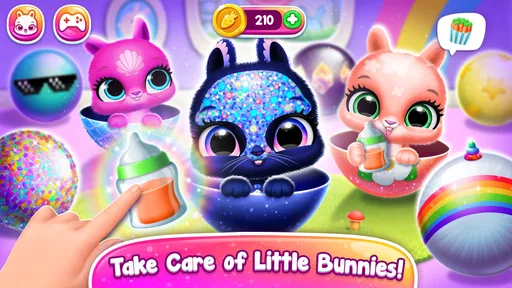
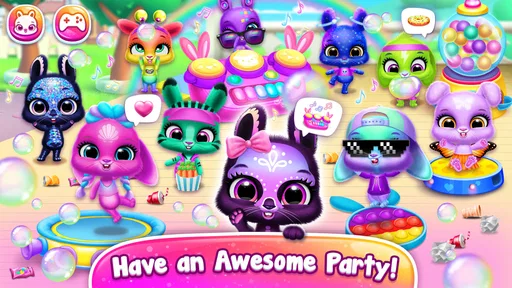
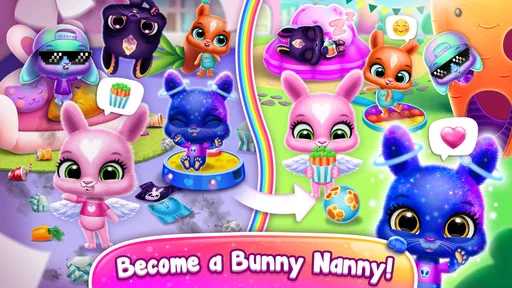
 Analysis by AppCompare
I spent time with Bunnsies - Happy Pet World to see whether its appeal goes beyond a cute presentation. The central idea is simple: you hatch and collect bunnies, care for them, and use them in small pet-focused games. What makes that idea work is the way it turns routine care into the main activity rather than treating it as a quick extra between larger challenges.
That focus makes this a gentle educational game for children and families who want something calmer than a competitive mobile title. I found it easiest to enjoy in short sessions, when I wanted a friendly activity with clear goals and plenty of visual feedback. It is free to start, carries an Everyone age rating, and comes from TutoTOONS, a developer known for making accessible games for younger players.
Why caring for the bunnies is the real attraction
The most important capability here is not simply collecting different bunnies. It is the care loop around them. Hatching gives the player a reason to keep exploring, but looking after the animals gives each visit a purpose. Instead of opening the game only to chase a score, I could return to check on the pet world, interact with the bunnies, and then move into a playful activity.
That structure is especially useful for younger players because it presents progress in a form they understand immediately. A bunny is visible, expressive, and easy to identify with. The player can connect an action with a result without having to learn complicated rules first. In my experience, that makes the game feel more approachable than many educational titles that begin with instructions, quizzes, or abstract rewards.
The educational value is fairly informal. This is not a lesson app with a defined school subject or a traditional curriculum. Instead, it encourages attention, sequencing, responsibility, and gentle decision-making through the pet routine. A child can learn that looking after something involves repeated actions, while the mini-games provide a change of pace that keeps the experience from becoming a checklist.
The strongest part of the design is the connection between care and play. If the bunnies were only collectibles, the experience would probably feel shallow very quickly. If the care tasks were too demanding, it would stop feeling like a relaxing game. The balance aims for a middle ground: enough interaction to make the pets feel meaningful, without turning the player into a manager of a complicated virtual household.
How the collection loop feels during ordinary play
Hatching and collecting create a natural sense of discovery. Each new bunny gives the player something recognizable to return to, and the collection itself can become a motivation for children who enjoy sorting, noticing differences, and completing sets. I would not describe the collection as a deep strategy system, but it does give the game a longer tail than a single batch of mini-games would have.
Worth Reading Before You Choose

EA SPORTS FC Mobile 26 Is a Bigger Football Game, but It Takes Time

Flipboard Shows What News Apps Must Do Beyond the Feed

Switching to Android Auto Means Rethinking Your Driving Routine

Google Calendar Makes a Crowded Week Easier to Manage

Ludo King Makes the Most of the Minutes Between Plans

Baby Panda World Brings Quick Play to Modern Phones, but Its Game Library Feels Busy
The useful distinction is that collection is not the only reason to continue. A child who is not interested in completing everything can still spend time with the pets and play casually. On the other hand, a child who enjoys collecting has an additional goal that can make repeated visits feel worthwhile. That flexibility is one reason the game works better as a shared family choice than as a narrowly educational exercise.
Parents should still frame the collecting carefully. Any game built around discovering more items can encourage repeated play, even when the activities themselves are gentle. I found it more sensible to treat the collection as a bonus rather than promise that a child will unlock every bunny. That keeps the focus on playing with the pets instead of turning the experience into a demand for constant progress.
What the mini-games add to the experience
The pet games matter because they break up the care routine. Without them, hatching and looking after bunnies could become repetitive. Their role is not to provide a demanding arcade challenge; it is to give the player another way to interact with the world and to make a session feel varied.
For a younger player, that variety can be more important than difficulty. A game that is too hard may lead to frustration, while a game that is too easy may lose attention. Bunnsies aims for immediate participation, so it suits children who respond better to visual prompts and playful repetition than to long explanations. I also found that the change between caring and playing helps create a natural stopping point: finish an activity, check the pets, and decide whether to continue.
One practical tip is to let the child explain what they are doing instead of taking over. Asking which bunny they chose, what they are trying to do, or why they want to play a particular activity turns the game into a conversation. That adds more value than simply leaving the child alone with the screen, especially because the game’s educational side is based more on interaction and routine than on formal teaching.
A realistic after-school use case
I can see this fitting well into a short after-school wind-down. A child could open the game, spend a few minutes caring for the bunnies, play one or two pet activities, and then stop without needing to reach a major level or complete a long story. That makes it more suitable for a limited screen-time window than games that rely on extended missions or online competition.
It can also work during a quiet family moment. One person can play while another asks questions about the bunnies, helps decide what to do next, or simply watches. The bright pet theme gives adults an easy way into the conversation, which is useful when a child is reluctant to talk about more obviously educational content.
For travel or waiting rooms, the short-session structure is appealing, but I would test it with the child first rather than assume it will work offline or in every situation. The game is free to begin, yet families should also check the device before handing it over, particularly if the child can reach purchase screens. That is a sensible precaution for any free mobile game with optional paid items.
Where the free model changes the decision
The game can be downloaded without an upfront purchase, which lowers the barrier for families who want to try it before committing. However, optional in-app items range from $1.49 to $159.99 per item. That is a wide range, and it is the main point where adult supervision becomes important. A child may see collecting as the natural goal of the game without understanding that some progress-related choices can involve real money.
I would set purchase controls before allowing independent play and explain clearly that not every attractive option needs to be obtained. This is not a criticism of the bunny concept itself; it is a practical consequence of combining a child-friendly collection loop with optional purchases. The strongest way to preserve the relaxed tone is to make the spending boundary part of the household rules from the start.
Another trade-off is that the game’s gentle approach may not satisfy children looking for complex strategy, fast competition, or a substantial story. I would not choose it for a player who wants difficult puzzles, multiplayer rivalry, or a deep simulation. Its appeal comes from repetition, care, discovery, and accessible play. Those qualities are strengths for the right audience, but they can feel limited to someone who has already outgrown simple pet games.
How it compares with familiar alternatives
Compared with a conventional educational app, this game is less direct. A reading, mathematics, or language app usually tells the player what skill is being practiced and measures progress around that subject. Bunnsies takes a softer route. It uses pet care and play to encourage attention and routine, so it may be easier to start but less useful when a parent wants targeted academic practice.
Compared with a traditional virtual-pet game, it places more emphasis on child-friendly discovery and mini-games rather than on detailed simulation. Players who want a highly realistic pet schedule, complex customization, or extensive management may prefer another type of title. I liked the lighter structure because it reduces pressure, but that same simplicity means the game is not trying to replace a full pet simulator.
It also differs from competitive casual games by keeping the focus on the player’s own collection and activities. There is no need to compare performance with strangers to enjoy the basic loop. For families who want a calmer alternative to leaderboard-driven games, that is a meaningful advantage. For children motivated mainly by competition, it may remove the element that normally keeps them engaged.
Small habits that make the experience better
I recommend treating each session as a small routine instead of trying to exhaust every available activity. Start by checking the bunnies, choose one clear thing to do, and stop when the child’s attention begins to drift. This approach makes the care element feel intentional and prevents the collection loop from becoming an endless request for “just one more” interaction.
It is also worth rotating who chooses the activity. If the child always selects the same pet game, an adult can occasionally invite them to try another part of the world, not as a demand but as a suggestion. That reveals whether the child actually enjoys the care mechanics or is only interested in a particular mini-game. It helps parents decide whether the game is offering lasting variety or merely a brief novelty.
Another useful approach is to connect the virtual routine with everyday responsibility. After playing, a parent might ask what the bunny needed and compare that with caring for a real pet, a plant, or a favorite toy. The comparison should stay light, because the game is not a realistic animal-care simulator, but it can turn a few minutes of screen time into a simple discussion about consistency and kindness.
Device expectations and long-term appeal
The game supports devices running Android 7.0 or later, so it is available to a broad range of Android phones and tablets. The current version is 1.6.206. In practical terms, I would still use a device with a comfortable screen and enough space for a child to tap accurately, since small controls can make any pet game less enjoyable for younger players.
Its audience is clearly broad: the Everyone rating and accessible mechanics make it suitable for children, while adults can join in without needing to learn a complicated control scheme. Still, “suitable for everyone” does not mean equally interesting for everyone. Older players may find the pace too gentle, and adults looking for meaningful educational assessment will probably want a more specialized app alongside it.
The game has attracted more than ten million installs and holds a 4.0 average from about 6.9 thousand ratings, with 148 written reviews. Those figures suggest that the concept has reached a substantial audience, but they should not replace a personal trial. The right question is whether the child enjoys the care loop after the initial excitement of hatching a bunny fades.
Who gets the most from this bunny world
I think the best match is a younger player who likes animals, enjoys repeating familiar routines, and responds well to colorful interactive feedback. It is also a good pick for parents who want a free starting point for calm, supervised play rather than a game built around speed or competition. The pet theme makes it approachable, and the mix of care and mini-games gives the child more than one way to participate.
It is less suitable for a child who needs a precise learning target, such as spelling practice or arithmetic drills. It is also not my first choice for someone who becomes fixated on collecting every item or frequently asks to make purchases. In those cases, a focused educational app or a game with a simpler progression model may be a better household fit.
My overall view is positive, with a clear qualification: this is best understood as a gentle pet-care game with educational benefits, not as a replacement for structured learning. I enjoyed the way the bunnies give ordinary play a sense of routine, and I think the short activities can work well in a family’s limited screen-time schedule. The free entry is helpful, but purchase controls are essential because of the optional item prices.
For families who want a friendly first virtual-pet experience, I would recommend giving it a try. Keep the sessions short, talk about what the child is doing, and treat collecting as optional rather than compulsory. With those boundaries, Bunnsies - Happy Pet World offers a cheerful, low-pressure way to combine caring, discovery, and play without pretending to be something more demanding than it is.
Pros
- Cute
- colorful visuals are appealing to children and casual players.
- Simple controls make the game easy to learn without a tutorial.
- Many Bunnsies create a fun sense of collection and discovery.
- Short activities suit quick play sessions on mobile devices.
- Gentle gameplay offers a relaxing alternative to competitive games.
Cons
- Some content may feel repetitive after extended play sessions.
- Progress can be slow without spending time on daily activities.
- The child-focused design may seem too simple for older players.
- Frequent rewards and prompts can make the interface feel busy.
- An internet connection may be needed for some features or updates.
FAQs for Bunnsies - Happy Pet World
What is Bunnsies - Happy Pet World?
Bunnsies - Happy Pet World is a casual virtual pet game focused on caring for adorable bunny-like characters. You can adopt pets, feed them, keep them clean, play with them, decorate their surroundings, and discover new activities as you progress. It is designed mainly for children and families, with colorful visuals, simple controls, and relaxed gameplay rather than competitive action.
How do you take care of pets in Bunnsies?
Taking care of pets involves completing everyday activities such as feeding them, washing them, playing mini-games, and responding to their needs. Regular interaction helps keep the bunnies happy and allows you to earn rewards or unlock additional content. The tasks are easy to understand, although younger players may still need guidance when managing menus, purchases, or time-based activities.
Is Bunnsies - Happy Pet World free to download and play?
The game can generally be downloaded for free, but it may include optional in-app purchases. These purchases can provide virtual items, cosmetic content, extra resources, or other conveniences. Some features may also be supported by advertisements or require waiting before they become available again. Parents should review the store listing and device purchase settings before allowing children to play.
Does Bunnsies require an internet connection?
Some parts of Bunnsies may work without a constant internet connection, especially basic pet-care activities that are already available on the device. However, an internet connection may be needed for advertisements, purchases, updates, cloud-related features, or newly loaded content. Because offline availability can change between versions, it is best to test the game after installation rather than assuming every feature works offline.
Is Bunnsies - Happy Pet World suitable for children?
Bunnsies is built around friendly pet care, colorful characters, and straightforward activities, making it generally suitable for younger players. Nevertheless, parents should check the recommended age rating and supervise play when possible. In-app purchases, advertisements, external links, and screen-time concerns are the main areas to review. Using parental controls can help prevent accidental purchases and limit access to unsuitable content.


